Barry R. McKendrick
Owner/President, Safeguard Stairlifts
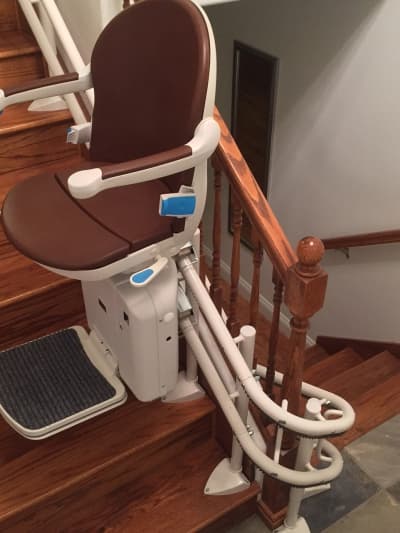
How to Measure Your Staircase for a Stairlift
To measure for a stairlift, note your staircase length (bottom to top landing), width (wall to railing), any turns or landings, and ceiling height at the lowest point. Measure where outlets are located and note any obstructions. A professional assessment will verify measurements with precision tools.
When families call me for a stairlift consultation, they often ask what they can do to prepare. While I always do a thorough professional measurement with our computerized system, having basic measurements ready helps you understand your options and have more productive conversations with installers.
Why Measurements Matter
A stairlift is not one-size-fits-all. The track is custom-cut to your exact staircase length, and the configuration depends on:
- Stair type - Straight or curved
- Available width - How much room for the rail and seat
- Landing space - For safe entry and exit
- Ceiling clearance - Especially at turns
- Electrical access - Stairlifts need power
Getting these wrong means the stairlift won't fit or won't be safe. That's why professional measurement is essential - but DIY measurements help you prepare.
Basic Measurements You Can Take
1. Staircase Length
How to measure: Use a tape measure from the bottom landing floor to the top landing floor, measuring along the wall or following the stairs.
| Stair Type | How to Measure |
|---|---|
| Straight | Total length from first step nose to top landing |
| L-shaped | Measure each straight section separately |
| Curved | Very difficult - leave this to professionals |
What it tells you: Length determines track cost - longer stairs mean more track material.
2. Staircase Width
How to measure: Measure from the wall to the handrail at the narrowest point of your staircase.
- Minimum for most stairlifts: 28 inches
- Comfortable width: 32+ inches
- Narrow staircases: May need slim-profile track
Pro tip: A stairlift rail adds about 6-8 inches to the stair width. You'll still need room for people to walk past.
3. Ceiling Height at Low Points
How to measure: Stand on each step and measure from the step surface to the ceiling directly above.
Why it matters: At turns and landings, the rider's head must clear the ceiling. Utah homes with finished basements often have lower ceilings on basement stairs.
Minimum clearance: The seated rider needs at least 6 inches of headroom throughout the ride.
4. Landing Space
How to measure: Measure the floor area at the top and bottom of your stairs.
| Location | What to Measure |
|---|---|
| Bottom landing | Space for chair to park and swivel |
| Top landing | Space to safely step off |
| Doorways | Distance from stairs to nearest door |
Why it matters: The stairlift chair needs room to park and the rider needs safe space to get on and off.
5. Electrical Outlet Location
How to measure: Note where the nearest electrical outlet is at the top and bottom of your stairs.
- Ideal: Outlet within 6 feet of the track end
- If no outlet: An electrician can add one (additional cost)
- Most stairlifts: Plug into standard 110v outlet
Identifying Your Staircase Type
Straight Staircase
Your staircase is straight if it:
- Goes from one floor to another without any turns
- Has no intermediate landings
- Has all steps going in the same direction
Cost implication: Straight stairlifts use standardized parts and are the most affordable option. Contact us for a personalized quote or see our full cost guide.
Curved Staircase
Your staircase is curved if it has any of these:
- 90-degree turns (L-shaped)
- 180-degree turns (U-shaped)
- Spiral or helical design
- Intermediate landings
- Pie-shaped or winder steps
Cost implication: Curved stairlifts require custom manufacturing for your specific staircase. Request an in-home assessment for accurate pricing, or learn what drives curved stairlift cost.
Utah Home Considerations
Many Utah homes have features that affect stairlift installation:
- Split-level homes - Often have multiple short staircases
- Basement stairs - May have lower ceilings
- Older homes - Sometimes have narrower staircases
- Bi-level entries - Short stairs at the entrance
These aren't problems - just factors that affect the solution we recommend.
What Professional Measurement Adds
When I come to your home, I use computerized measuring equipment that provides:
Precision to 1/8 Inch
- Custom-cut track lengths
- Exact turn configurations
- Precise mounting points
Safety Verification
- Weight capacity assessment
- Wall/stair structural integrity
- Obstacle identification
- Emergency stop positioning
3D Modeling
For curved staircases, measurements create a 3D model that manufacturers use to custom-build your track. This is why curved stairlifts take 2-4 weeks to manufacture.
Common Measurement Surprises
After thousands of Utah installations, here are issues I often find that homeowners missed:
Obstructions
- Radiators or HVAC vents on the wall
- Light switches or outlet covers in the way
- Decorative moldings at turns
- Doors that swing into the stair path
Structural Issues
- Walls that aren't actually walls (railings with drywall)
- Floors that aren't level
- Steps of inconsistent height
- Loose or damaged steps needing repair first
Clearance Problems
- Ceiling lights or fixtures hanging too low
- Overhead beams at turns
- Doorframes too close to landing
The good news: Most issues have solutions. That's what 20 years of experience helps with.
Preparing for Your Professional Assessment
To make the most of your in-home consultation:
Before the Visit
- Clear the staircase of clutter
- Note any concerns or questions
- Have other decision-makers present
- Think about which hand you'd prefer for controls
Information to Have Ready
- Current mobility challenges
- Medical conditions affecting strength or balance
- Future considerations (will needs change?)
- Timeline for installation
- Budget range (so I can suggest appropriate options)
Questions to Ask the Installer
- How does my staircase affect the cost?
- What warranty do you offer?
- How long will installation take?
- Who handles maintenance and repairs?
- Do you have references from Utah customers?
Get Your Free Professional Assessment
While DIY measurements help you understand your options, there's no substitute for professional measurement. At Safeguard, I personally do every assessment using computerized measuring equipment - the same system used by the top manufacturers.
I'll give you:
- Exact measurements for accurate quotes
- Options for your specific staircase
- Honest assessment of challenges
- No-obligation written estimate
Ready to get started? Contact me for a free in-home assessment. I'll come to your home, measure your stairs, and give you a clear picture of your options — no pressure, no obligation.